Quick answer
Plan monthly grocery shopping in four steps: check what you already have, plan roughly what you will cook, write a list grouped by category, and set a spending limit. Then shop once for staples, top up fresh items weekly, and avoid extra trips where impulse buys happen.
Key takeaways
- A stock check before shopping is the easiest way to save money.
- Group your list by category so nothing is forgotten.
- Shop for staples once a month and fresh items weekly.
- Fewer trips means fewer impulse purchases.
Why planning saves money
Most unnecessary grocery spending does not come from the big items. It comes from duplicates, forgotten items that need a second trip, food that spoils before it is used, and impulse buys picked up while waiting at the counter. A simple plan cuts all four.
Planning does not have to be complicated. Twenty minutes once a month is usually enough.
Step 1: Check what you already have
Before writing anything, open your kitchen shelves, fridge and storage tins. Note what is running low and what you still have plenty of. Many households find a second packet of the same spice or a forgotten bag of dal at the back of a cupboard.
Do this a day or two before you shop, not on the way out of the door.
Step 2: Plan your meals roughly
You do not need a strict menu. A rough idea of your usual weekly pattern is enough: how many times you make idli or dosa, how often you cook biryani or special dishes, and whether you have guests or festivals coming up. This tells you which items you need more of this month.
Step 3: Write a list grouped by category
A grouped list is faster to write and harder to forget items from.
- Grains and flours
- Dals and pulses
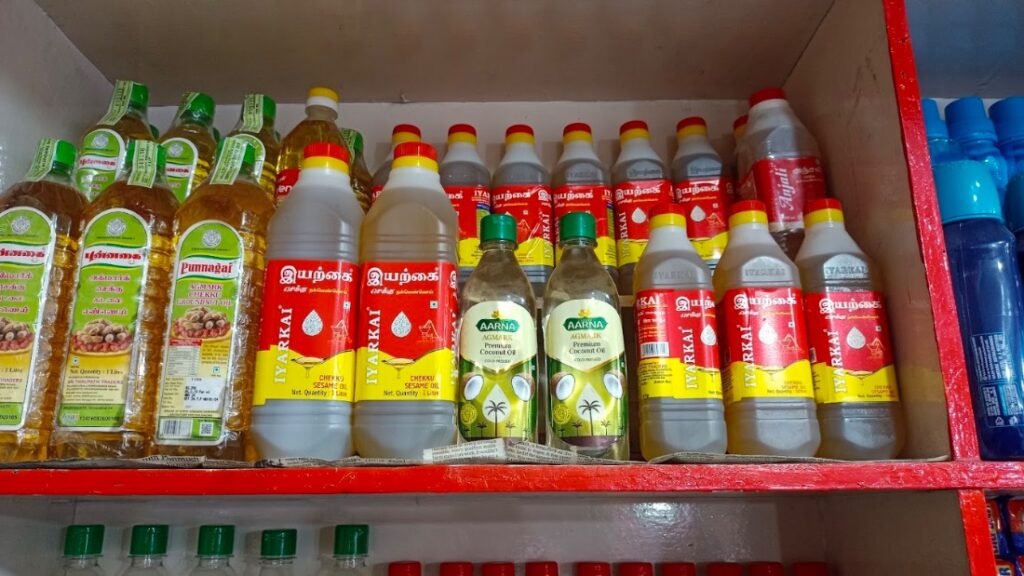
- Oils, ghee, sugar and salt
- Spices and masalas
- Breakfast, snacks and packaged foods
- Household and cleaning
- Personal care and pooja items
Step 4: Set a monthly limit
Decide roughly how much you want to spend before you shop. Look at last month's spending as a starting point. If the total comes out higher, see what can wait until next month, such as an extra snack variety or a second brand of detergent.
Keeping your bills for two or three months shows you where the money really goes, which makes setting a sensible limit much easier.
Smart habits while shopping
- Stick to your list. If something extra catches your eye, ask whether you will use it this month.
- Compare price per kg or per litre, not just pack price.
- Buy larger packs only for items you use steadily, like rice, oil and dal.
- Check expiry dates on packaged foods and oils.
- Avoid shopping when hungry; it leads to more snacks in the basket.
Reduce the number of trips
Every extra trip is a chance to spend more than planned. Try to do one main monthly shop for staples and household items, and one quick weekly top-up for vegetables and fresh items. If you can, send your list ahead to a local store so it is ready to collect or deliver, which saves time and keeps you from browsing.
At Sarvajana Stores in Pappampatti, you can send your monthly list on WhatsApp and we will pack and deliver it, so you buy what is on the list and nothing more.
Review at the end of the month
At the end of each month, spend five minutes looking back. What ran out early? What was left over? Did you need an extra trip for something? Adjust your list once and next month's plan will be even simpler.
Questions
Frequently asked questions
Check your stock before shopping, plan meals roughly, stick to a grouped list, compare price per kg, buy staples in sensible larger packs, and reduce extra trips that lead to impulse buys.
Shop this at Sarvajana Stores